
Innlandet · 16 September 2026
Madshus factory faces possible closure
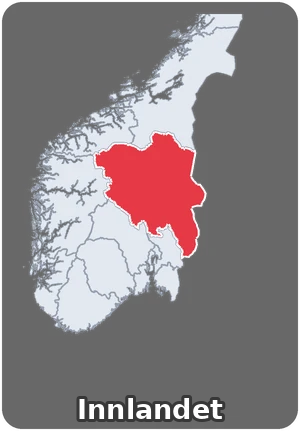
Madshus's board proposes winding down its Biri factory, while Innlandet news also highlights diesel costs, property remediation and overheating chargers.
Innlandet news from the past 48 hours has been dominated by a possible closure in Biri, Innlandet county: the Madshus board of directors proposes winding down the business, according to NRK Innlandet. Meanwhile, the forestry sector is warning about diesel costs, while Lillehammer property owners must fund major private remediation work. In Gjøvik, schools have collected more than 3,000 chargers following reports of overheating.
Innlandet news: Madshus in Biri faces possible closure
Madshus ski production in Biri could stop. The board of directors has proposed to wind down the business, a decision that would affect 32 employees at the site, NRK Innlandet reports. The company cites 120 years of ski production in Norway that could end. Employees have been informed that their jobs could disappear.
“It is a sad day for the employees,” says Torstein Myklebostad, CEO of Madshus, to NRK Innlandet. He adds that the main objective remains to build up Madshus and its brand, but the company cannot keep losing money indefinitely. He says he wants to ensure the profitability of the products sold and make better use of Biri’s resources, particularly for the development and manufacture of skis.
The proposal came as a surprise, according to NRK Innlandet. The broadcaster also says that Madshus ski production could be relocated, and that a report is to be broadcast on TV at 19h45. At this stage, no definitive timetable or final decision is detailed in the available headlines.
Fuel and taxation: the forestry sector under pressure
In the Innlandet news, the forestry sector remains dependent on diesel. NRK Innlandet describes a scene at the edge of a forest: a large machine grabs a spruce, fells it in a few seconds, strips the branches and moves on to the next tree. These machines consume forestry diesel. The company GM Skogsdrift AS has 31 forestry machines and uses around 100,000 litres of forestry diesel per month, estimates Ole Petter Storbråten, the managing director.
The increase in the tax on diesel, by 2.5 kroner per litre, is felt on the bottom line, according to NRK Innlandet. Storbråten stresses that many activities have been electrified, but that forestry machines have not been yet. He therefore considers his sector to be entirely dependent on diesel in day-to-day work. He asks the government to examine the situation of industries that have no genuine green alternative in their daily operations.
The source also mentions thin margins. When fuel prices rose last winter, the Storting adopted measures in the spring, according to NRK Innlandet. The available headline does not detail the exact scope of these decisions. The issue remains central to the rural economy of Innlandet county, where wood and forestry occupy an important place.
Private sanitation: 260,000 kroner for a Lillehammer couple
In Lillehammer, Mina Holm and Ole Christian Dokkeberg had to replace their private wastewater treatment system. Two new tanks were buried in the garden, and the whole system cost 260,000 kroner, according to NRK Innlandet, which first cites the notice published in GD Gudbrandsdølen. The couple says they were ordered to replace the system because it was too old and no longer cleaned sufficiently well.
Ole Christian Dokkeberg believes there was little room to discuss alternatives. In Norway, there are more than 320,000 small private sanitation systems, according to NRK Innlandet. All those more than 30 years old must be replaced by 2033. The owners are responsible. Most of these systems discharge into the Oslofjord, the source says.
The Lillehammer case illustrates the cost these requirements represent for rural homeowners. The 260,000 kroner is a significant expense for a household. The measure is intended to achieve an environmental goal, but it also raises questions about support and financing for the work, in Innlandet county and elsewhere.
Gjøvik collects more than 3,000 chargers after overheating incidents
In Gjøvik, schools have begun collecting tablet and laptop chargers. The municipality fears a risk of fire after reports of abnormally hot chargers, according to NRK Innlandet. Anne Mari Kind, the municipal education manager, explains that incidents were reported both at school and at home. The decision to collect all the chargers and replace them with new models from the supplier was made last week.
The collection covers 17 schools in Gjøvik: 12 primary schools and 5 secondary schools, according to NRK Innlandet. More than 3,000 charging blocks for tablets and MacBooks have been purchased for the pupils. The manager says it is still difficult to determine whether the problem affects a few chargers or a large number of devices. All the chargers are approved and CE-certified, which means that the manufacturer guarantees compliance with EU health, environmental and safety requirements.
📌 Local briefs
A man is being prosecuted for making two threats against DNB in Hamar. He was arrested on Friday, and armed police were deployed outside the bank’s premises at the CC Hamar shopping centre. The case is linked to a threat on 1 July in which firearms were mentioned, according to NRK Innlandet.
In Lillehammer, the city’s most expensive villa has been sold, reports GD Gudbrandsdølen. A restaurant has been closed by the Mattilsynet for the second time in a short period, and a new local political slate could emerge, according to the same media outlet. GD Gudbrandsdølen also reports that the Riksantikvaren rejected a project judged too dominant.
Hamar Arbeiderblad reports on a couple of entrepreneurs moving into one of the city’s most expensive apartments, special rules during a Karpe concert, and a shopkeeper who adjusts his business on match days. The outlet also reports that a local service could be short of 60 places next year, with no further details in the available headlines.
Sources: NRK Innlandet, Hamar Arbeiderblad, GD Gudbrandsdølen, The Local Norway — Period: 15 September 2026 and 16 September 2026
Automatically translated from French. Original: NFRadio, the French-language web radio in Norway, based on the sources named in the text.