The capital, at the head of the Oslofjord: museums, architecture and forests within reach by metro.
Information checked on 10 October 2026.
Worth seeing
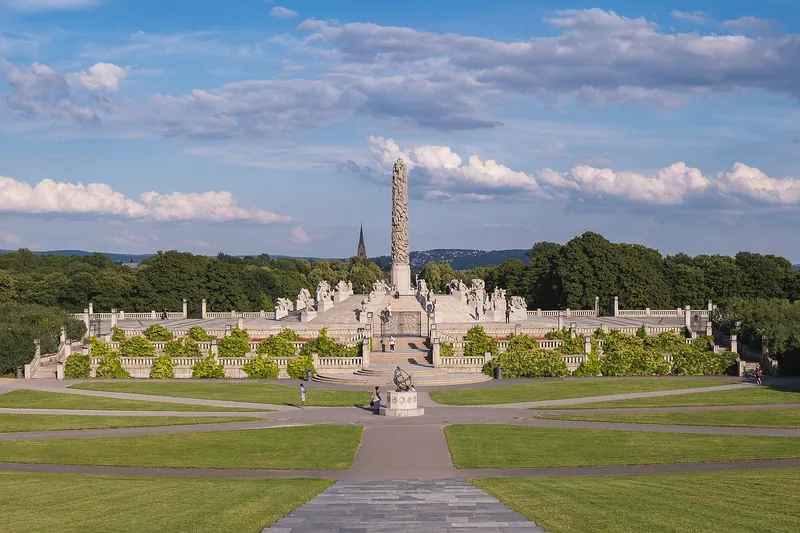
Vigeland Park (Vigelandsparken)
More than 200 sculptures by Gustav Vigeland in bronze, granite and wrought iron, the fruit of forty years' work, in the heart of Frognerparken. The Monolith, carved from a single block of granite, brings together 121 figures. Open around the clock, all year, and free.
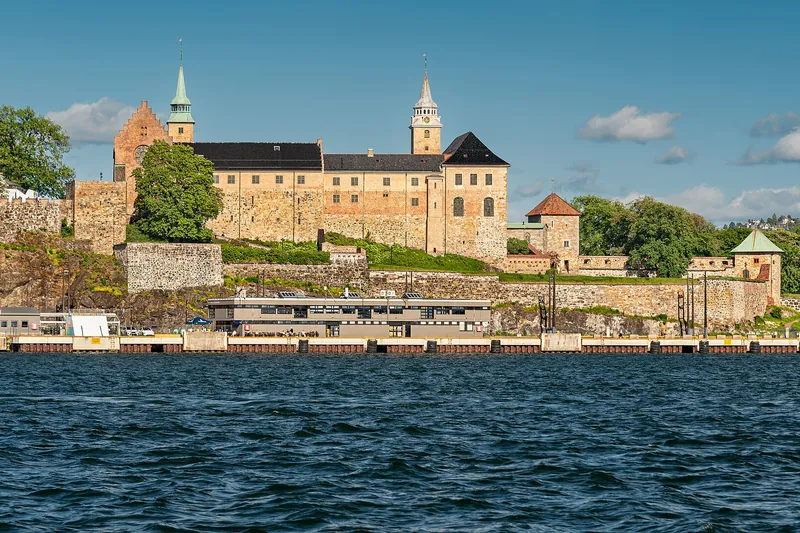
Akershus Fortress
A medieval castle built around 1300 under King Håkon V and turned into a Renaissance residence by Christian IV. The site is still military, but its grounds are open to the public free of charge, with a fine view over the harbour and the City Hall.
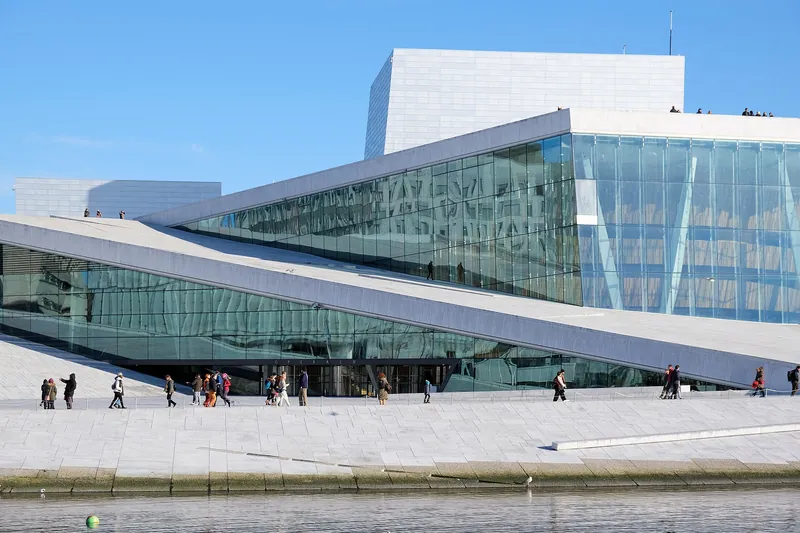
The Opera House (Operahuset)
Opened in 2008 and designed by the Snøhetta studio. You can walk freely on its white marble roof, which slopes down to the water of the fjord.
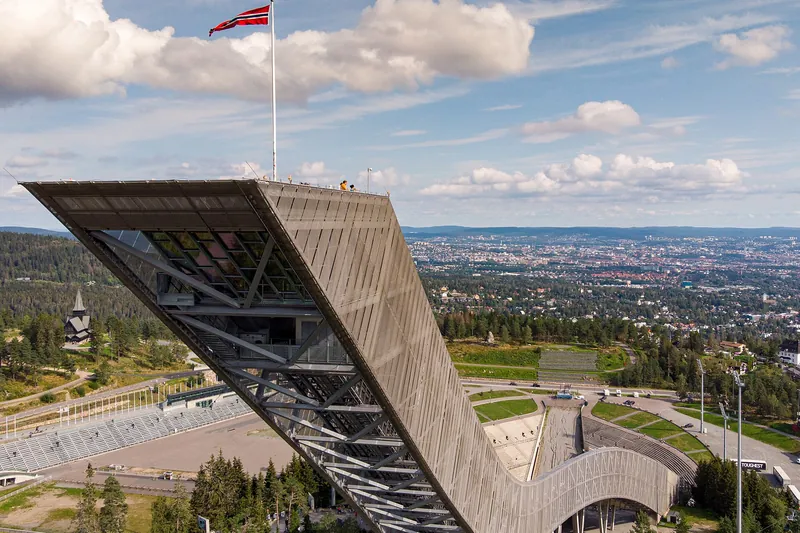
Holmenkollen
The ski jump on the hills above the city has hosted competitions since 1892; the current one dates from 2010. At its foot is the Ski Museum, and at the top a viewing platform over Oslo and its fjord. Reached by metro (line 1).
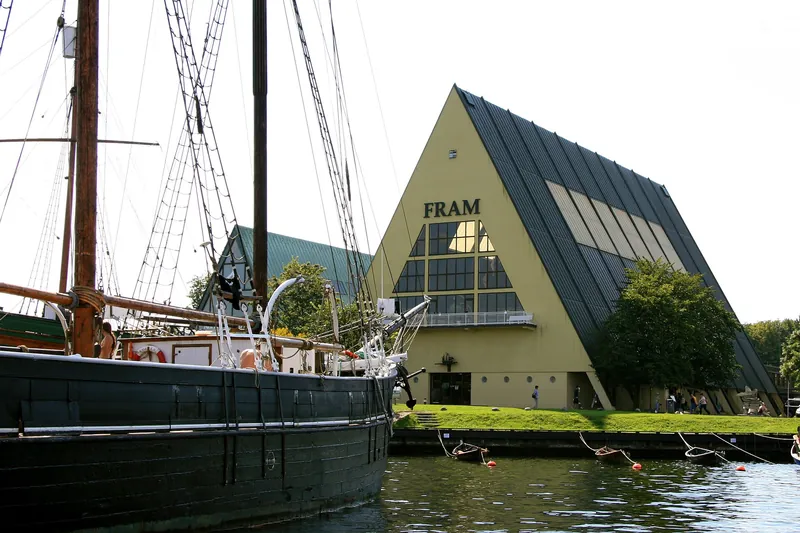
The Bygdøy museums
On the Bygdøy peninsula: the Fram, the polar ship of Nansen and Amundsen; the Kon-Tiki, Thor Heyerdahl's raft (1947); and the open-air Norwegian Folk Museum with its Gol stave church. The Viking Ship Museum is closed and due to reopen in 2027 as the Museum of the Viking Age (Vikingtidsmuseet).
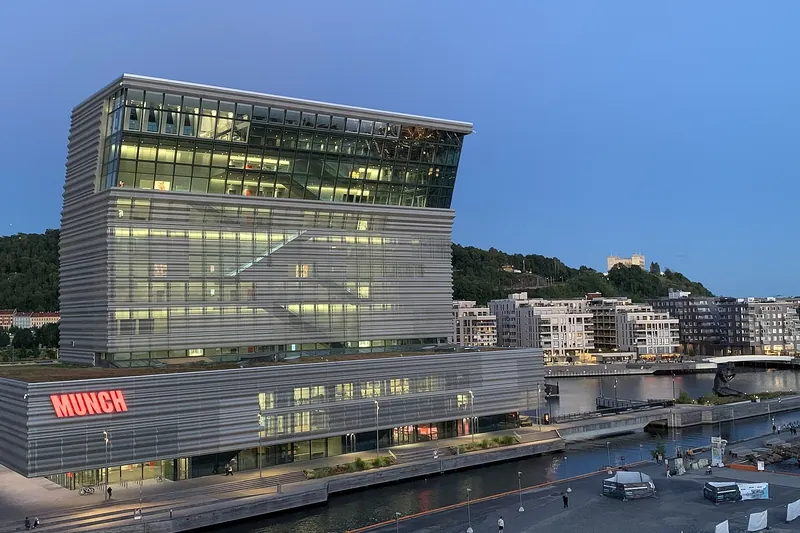
The Munch Museum (MUNCH)
Opened in 2021 on the waterfront next to the Opera House, it holds the world's largest collection of works by Edvard Munch, including versions of The Scream. Views over the city from the top floors.
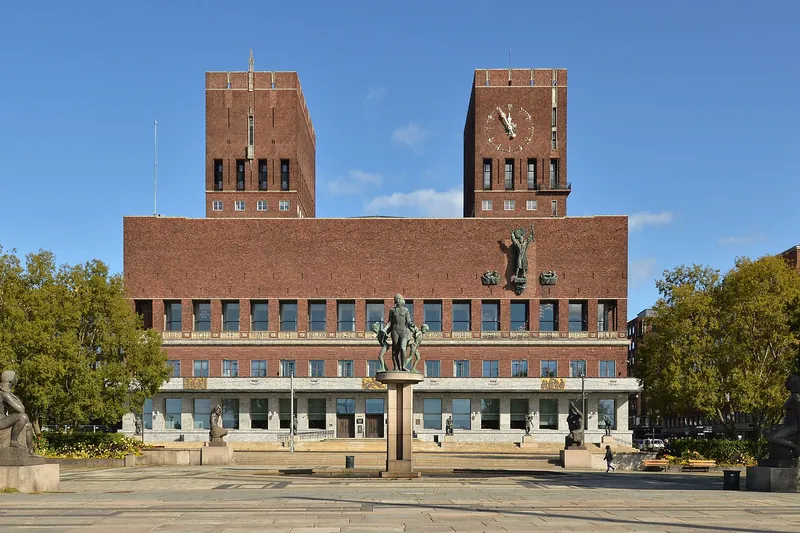
City Hall (Rådhuset)
The two brick towers, completed in 1950, where the Nobel Peace Prize is awarded every 10 December. The great halls decorated with murals can be visited free of charge.