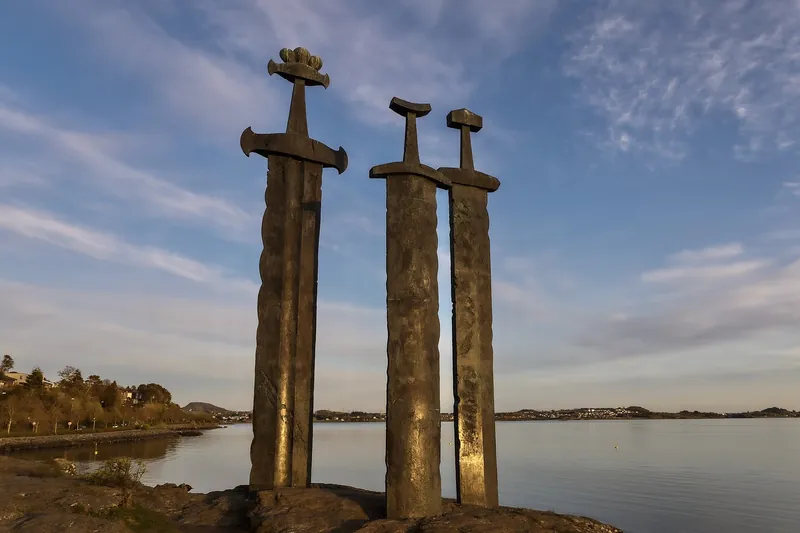
Hafrsfjord and "Sverd i fjell"
According to tradition, Harald Fairhair united Norway here in a battle around 872 — historians debate the date. On the shore near Stavanger, three 10 m bronze swords by Fritz Røed (1983) commemorate the event.
What you need to know to understand the country you live in: its Viking history, its folk tales, the light of the North, its wildlife, the coastal express and the traditions Norwegians share. Every piece of information is checked at the source.
Information checked on 10 October 2026.
From the late 8th century to the mid-11th, Scandinavians traded, raided and settled from Ireland to Russia. It is also when the kingdom of Norway took shape.
According to tradition, Harald Fairhair united Norway here in a battle around 872 — historians debate the date. On the shore near Stavanger, three 10 m bronze swords by Fritz Røed (1983) commemorate the event.
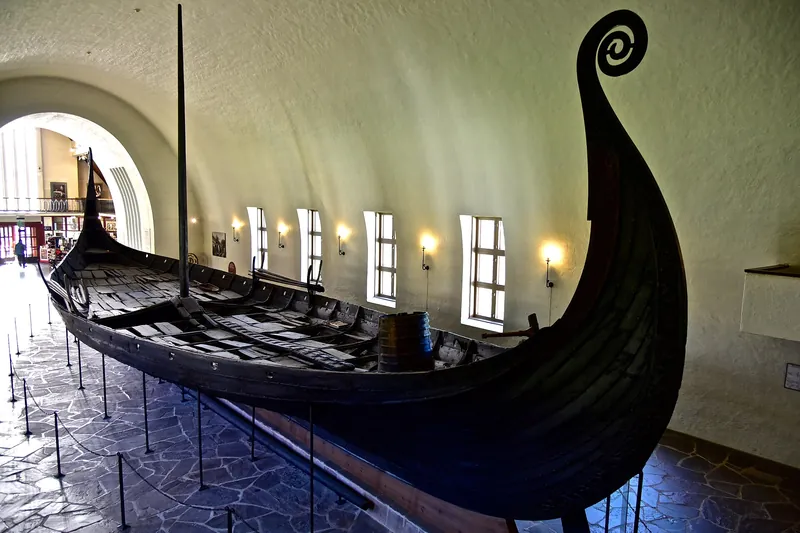
Two Viking ships found in burial mounds in Vestfold: Gokstad in 1880, and Oseberg in 1904 with the rich grave of two women (834). They will be shown at Oslo's new Museum of the Viking Age, planned for 2027.
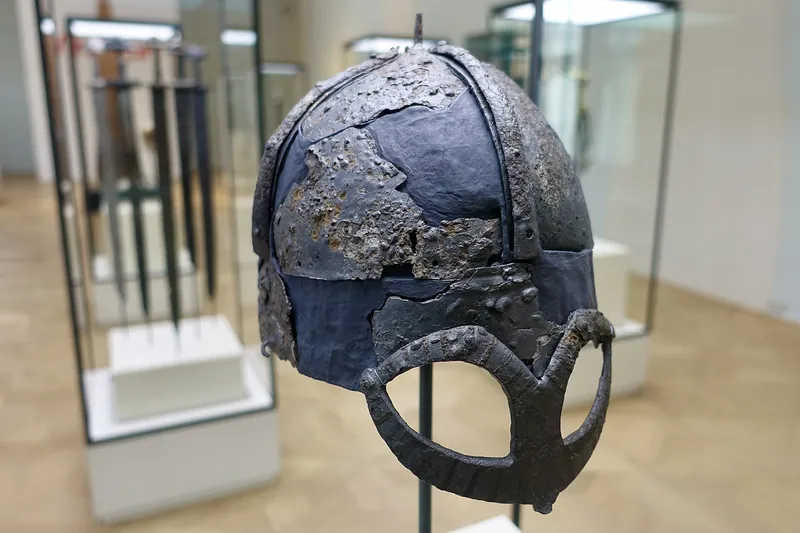
Found in 1943 at Ringerike in Buskerud, it is the only Viking-age helmet ever found in Norway and one of very few known in the world. It has no horns: horned helmets are a 19th-century invention.
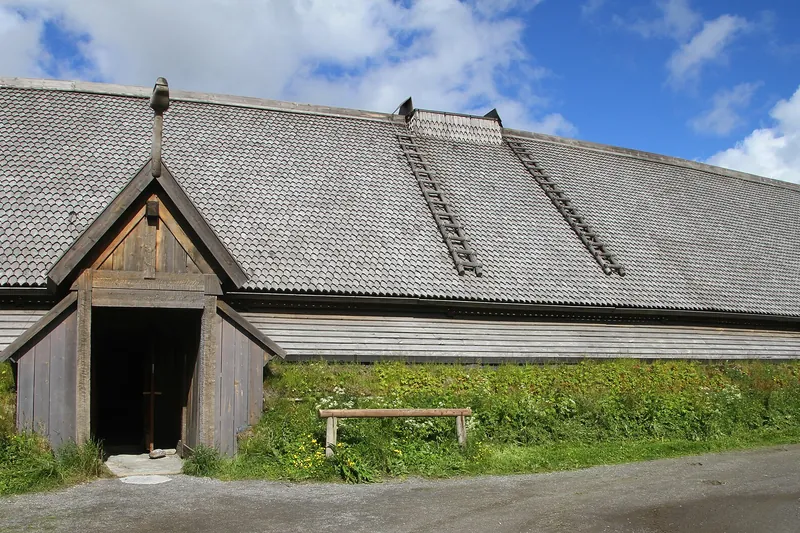
At the Lofotr museum in Borg, Lofoten, the rebuilt 83 m chieftain's house hosts feasts and festivals in summer. Every June the Viking festival at Avaldsnes near Haugesund, and other events, bring the crafts and combat of the age back to life.
Trolls fill Norwegian folk tales: mountain giants, often dim-witted, who turn to stone in sunlight. Many rocks and peaks bear their name.
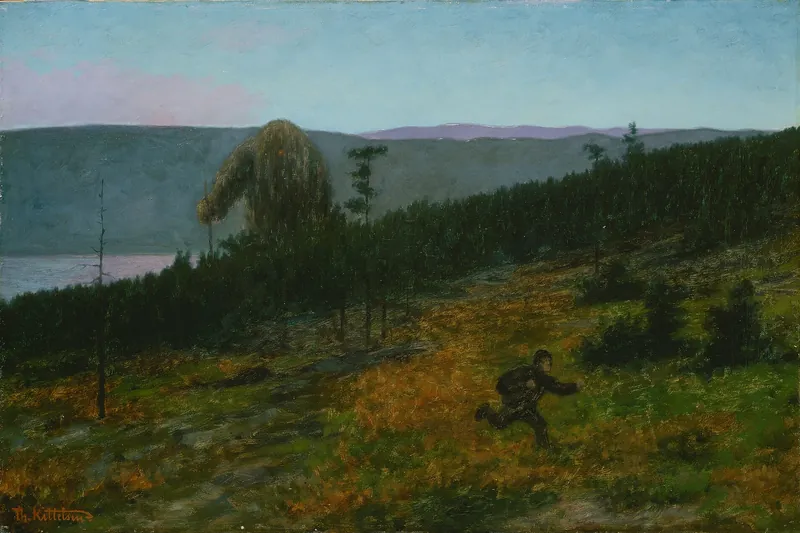
Peter Christen Asbjørnsen and Jørgen Moe collected Norwegian folk tales from 1841, like the Brothers Grimm in Germany. The trolls you see everywhere are the ones Theodor Kittelsen drew at the end of the 19th century.
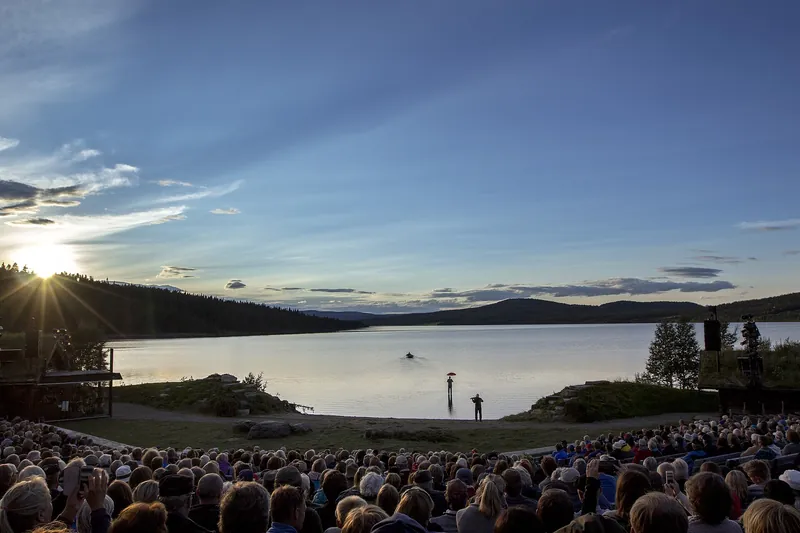
Henrik Ibsen's play (1867), set to music by Edvard Grieg for its 1876 premiere: "In the Hall of the Mountain King" became the most famous troll tune in the world. Every summer it is staged outdoors by Lake Gålåvatnet in the Gudbrandsdalen.
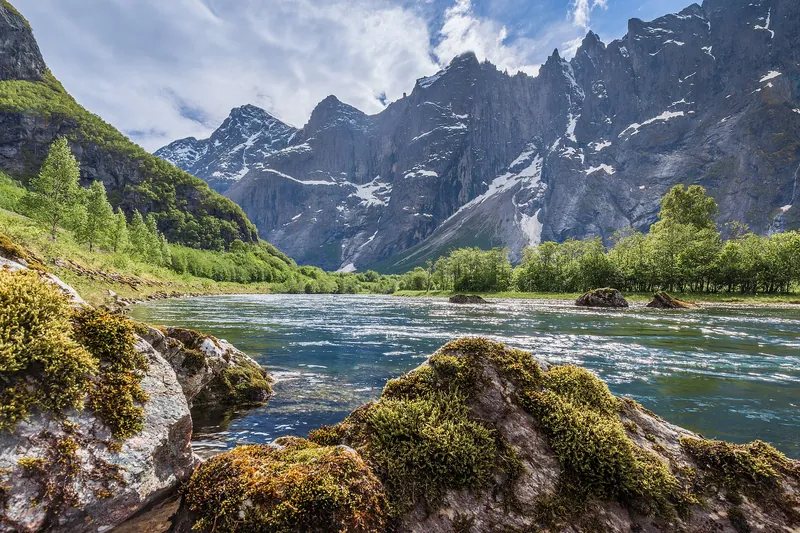
Trolltindene and Trollveggen in Romsdal, the Trollstigen road, Trolltunga above Odda, Trollfjorden in Vesterålen, Torghatten pierced, they say, by a troll's arrow: Norwegian geography is full of their names.
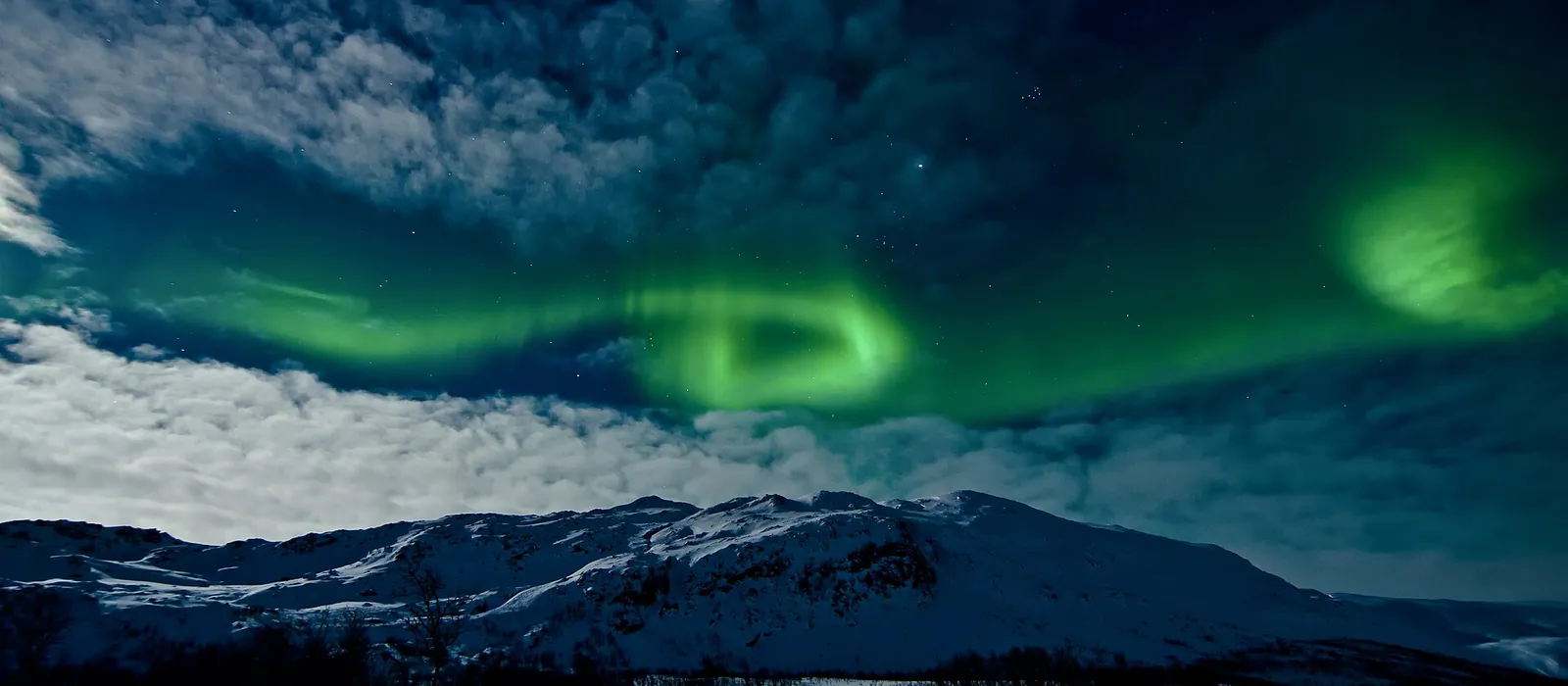
North of the Arctic Circle, the sun does not set in summer and does not rise in winter. The polar night is northern lights season.
They are caused by solar wind particles striking the upper atmosphere. You see them mainly from late September to late March, on clear nights away from lights, in Nordland, Troms and Finnmark; Tromsø and Alta are the most convenient bases. Forecasts are published on yr.no.
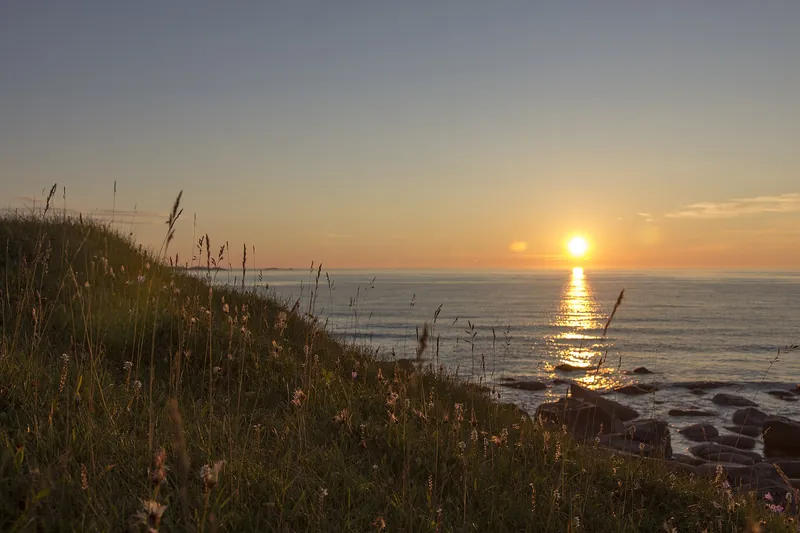
At the Arctic Circle the sun stays up all night around 21 June; in Tromsø from mid-May to late July, at the North Cape from mid-May to the very start of August. A sleep mask and blackout curtains help.
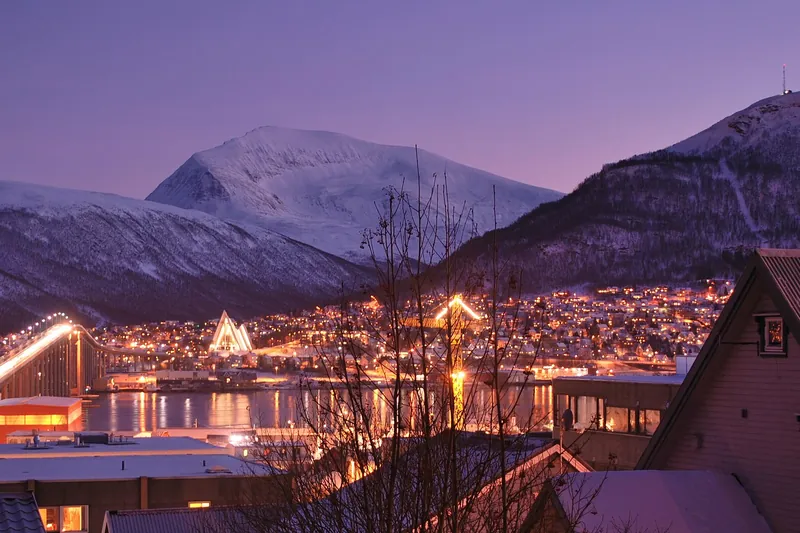
In Tromsø the sun does not rise from late November to mid-January, but a blue light glows for a few hours around midday. In winter many people need extra vitamin D, such as cod liver oil (tran), health authorities point out.
Moose by the roads, reindeer on the plateaus, whales offshore: big wildlife is close at hand, even in town. A few simple rules protect animals and drivers alike.
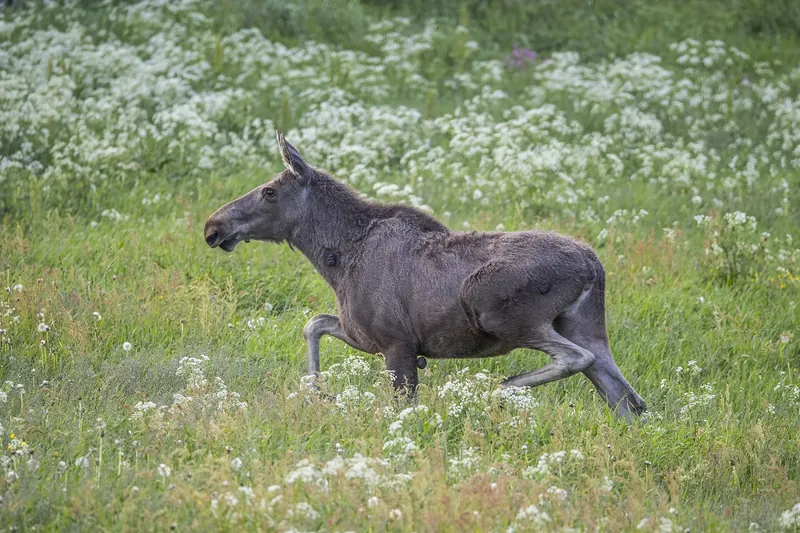
The country's largest land mammal: a bull often weighs 400 to 700 kg. Collisions are common at dawn and dusk, from autumn to spring: heed the triangular moose signs. Any collision with a moose or reindeer must be reported to the police (02800).
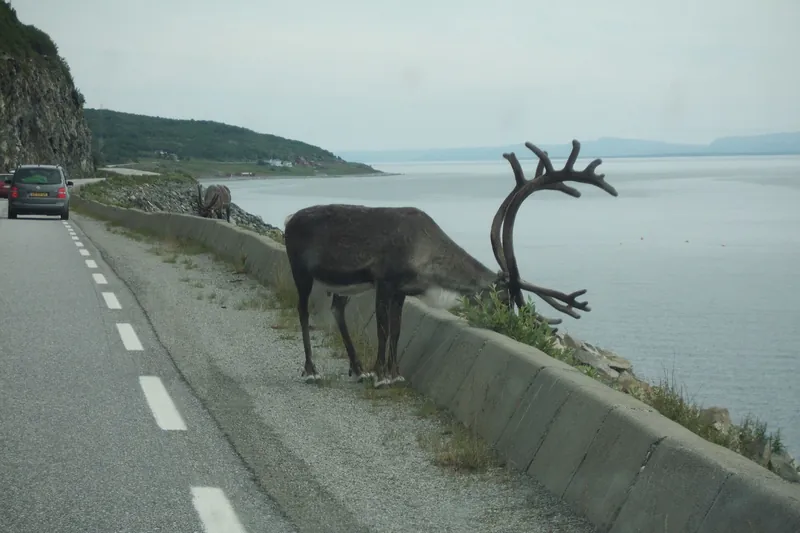
In the North, the reindeer you meet on the road nearly all belong to Sámi herders: slow down, they do not move aside. Europe's last large herds of wild mountain reindeer live in southern Norway, on the Hardangervidda, in Rondane and Dovrefjell.
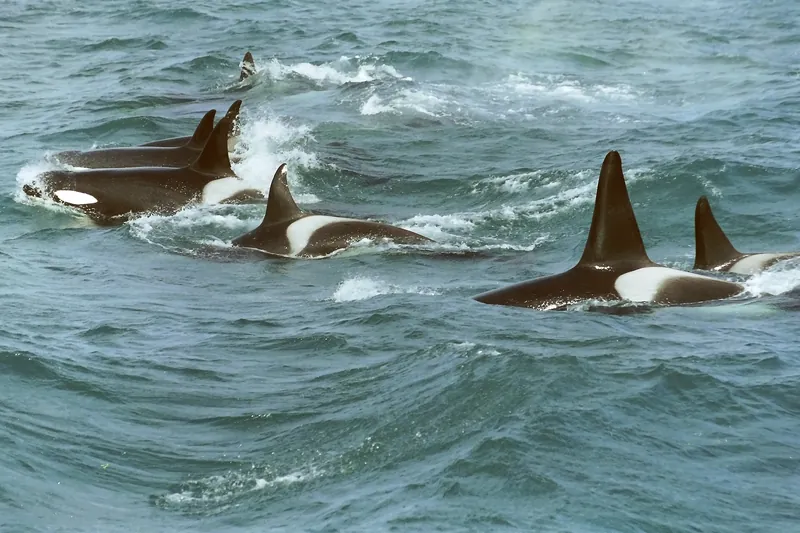
Sperm whales can be seen all year off Andenes; orcas and humpback whales follow the herring into the fjords around Tromsø and Skjervøy from November to January. Choose an operator that respects approach distances.
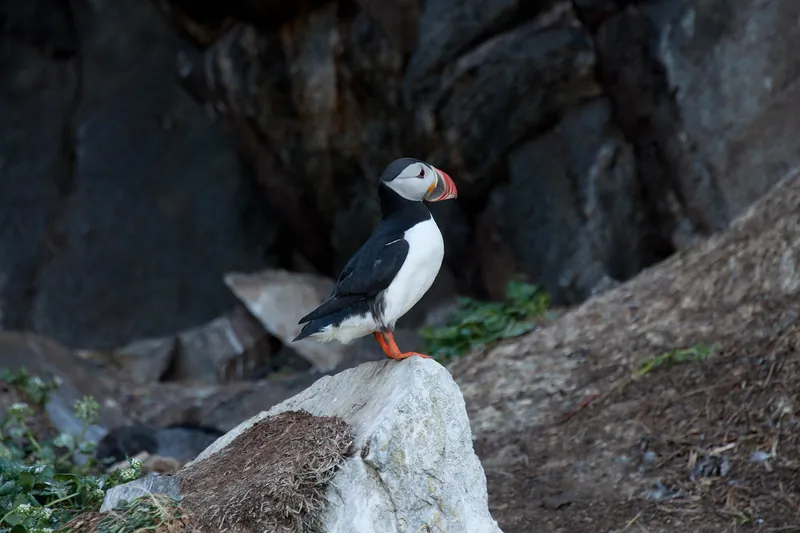
Puffins return to nest on the cliffs of Runde, Røst and Hornøya near Vardø from April to August. Keep away from the nests and stay on the paths.
Founded in 1893, the line now links Bergen and Kirkenes every day, calling at ports along the coast: 34 stops, about twelve days round trip. It is both a transport line and a cruise.
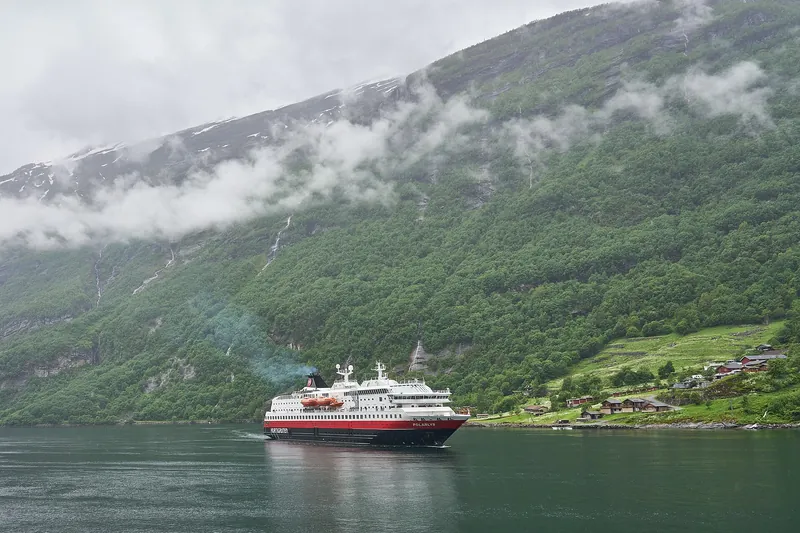
Two companies now share the route, Hurtigruten and Havila. You can do the whole voyage or just one stretch, like a ferry, with a cabin or a seat; night legs in winter pass under the northern lights.
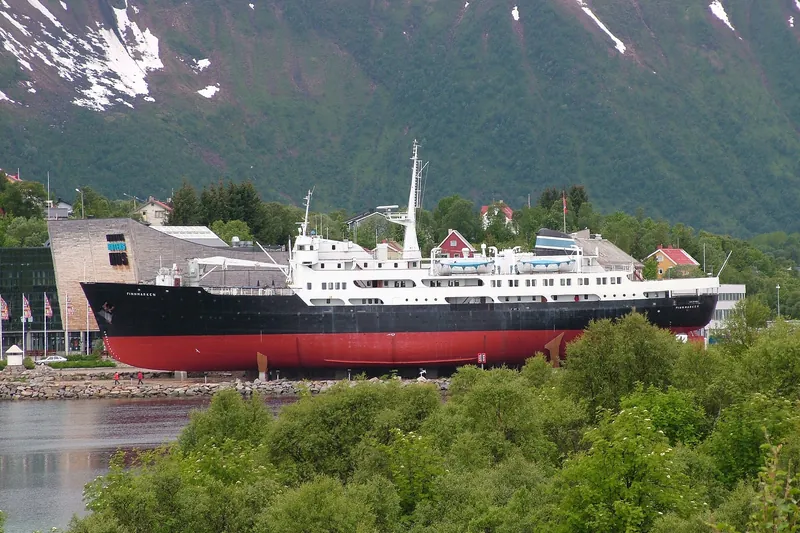
Stokmarknes, in Vesterålen, is the birthplace of the line: shipowner Richard With's company was based there when he launched it in 1893. The museum displays the old ship MS Finnmarken (1956), on dry land under a glass shelter.
What Norwegians share, and what people rarely explain to you: the national day, the cabin, and the right to walk and camp almost anywhere.
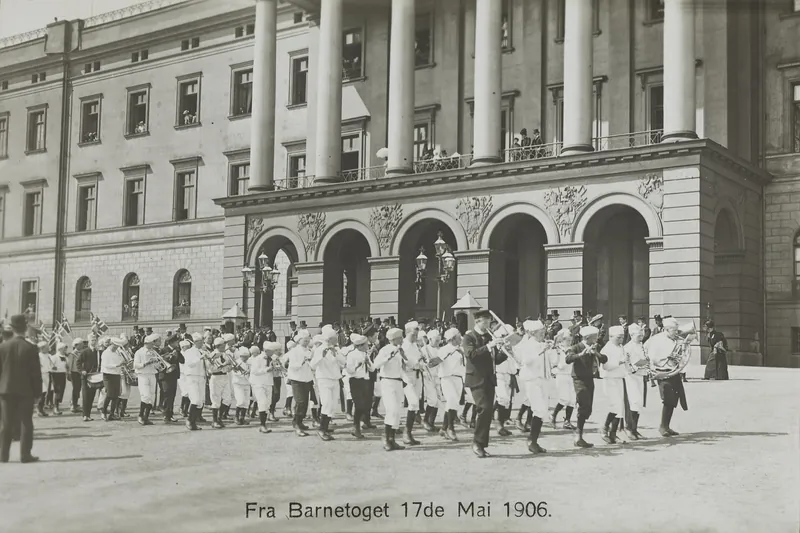
The national day celebrates the Constitution of 17 May 1814. No military parade: processions of schoolchildren waving flags in every municipality; in Oslo they march past the Royal Palace. Many wear the bunad, the traditional costume specific to each region.
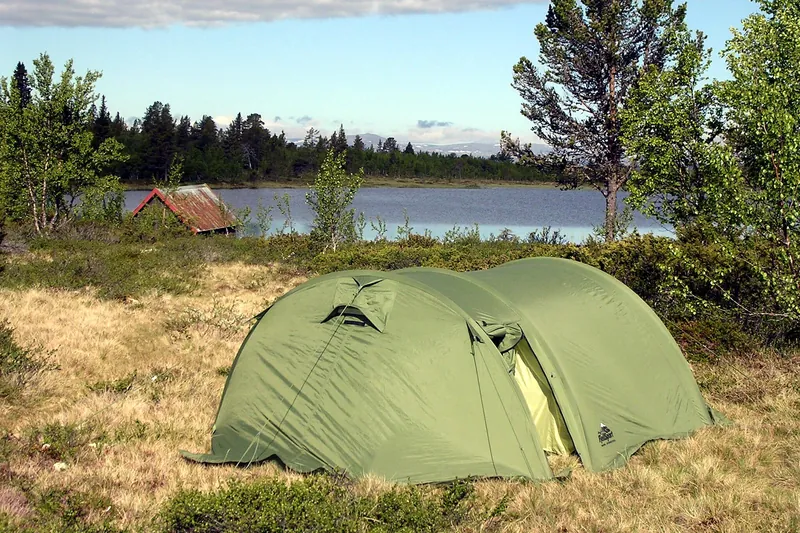
Everyone may walk freely in uncultivated land and camp for two nights in one spot, at least 150 m from an inhabited house or cabin. From 15 April to 15 September, fires are banned in or near woodland and open country, unless they clearly cannot start a blaze. Take your rubbish with you.
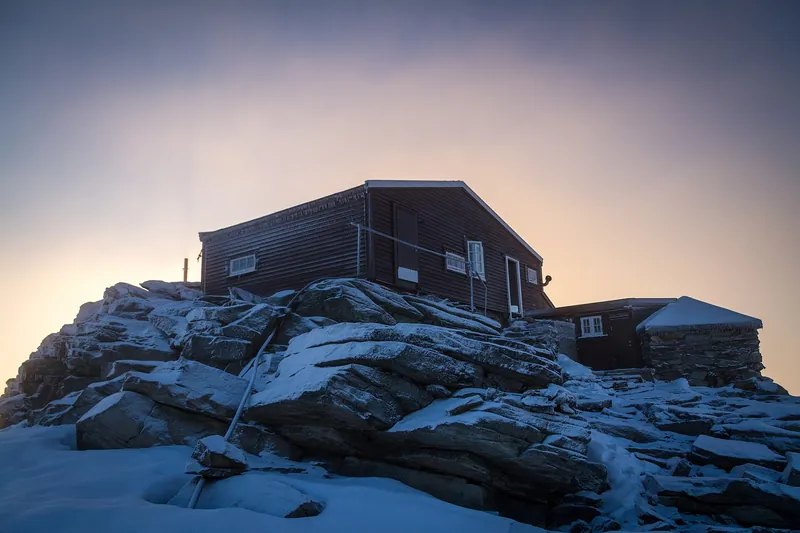
Nearly half a million holiday homes: the cabin (hytte) is an institution. Without one of your own, you can stay in the huts of the DNT trekking association, many of them self-service, provided you are a member with a key.


.jpg)
_Museum_Oslo._VIKINGR_Norwegian_Viking-Age_Exhibition_08_Iron_helmet_from_Gjermundbu_(Gjermundbuhjelmen)._Best-preserved_viking_helmet,_grave_find,_destroyed_in_funeral._Equestrian_warrior_950-1000._4654.jpg)


_female_Oppdal_2.jpg)


